Background
When research fails to properly represent Black, Asian, and ethnic minority communities, it produces findings that do not work for everyone and can worsen existing health inequalities.
Better accounting for race and ethnicity in health and care research is not about quotas or tick-boxes. It is about ensuring research produces the best possible evidence for everyone by being commissioned, conducted and communicated with race and ethnicity in mind.
In 2023 the NHS Race and Health Observatory (RHO) and the National Institute for Health and Care Research (NIHR) published a statement of intent to work together to ensure research plays a vital role in reducing health inequalities.
Vision for Change
Our primary objective is to develop a sector wide approach to make health and care research more representative of ethnic minority groups.
The aim is to build momentum across the whole research sector by organising coordinated action that builds on what can be done at the level of the individual organisation. This relies on having broad-based agreement that accounting for ethnicity is a priority, and a shared vision of the actions necessary to bring that about.
We aim to develop a framework and supporting toolkit by transparently engaging with stakeholders using the policy lab method.
First Steps
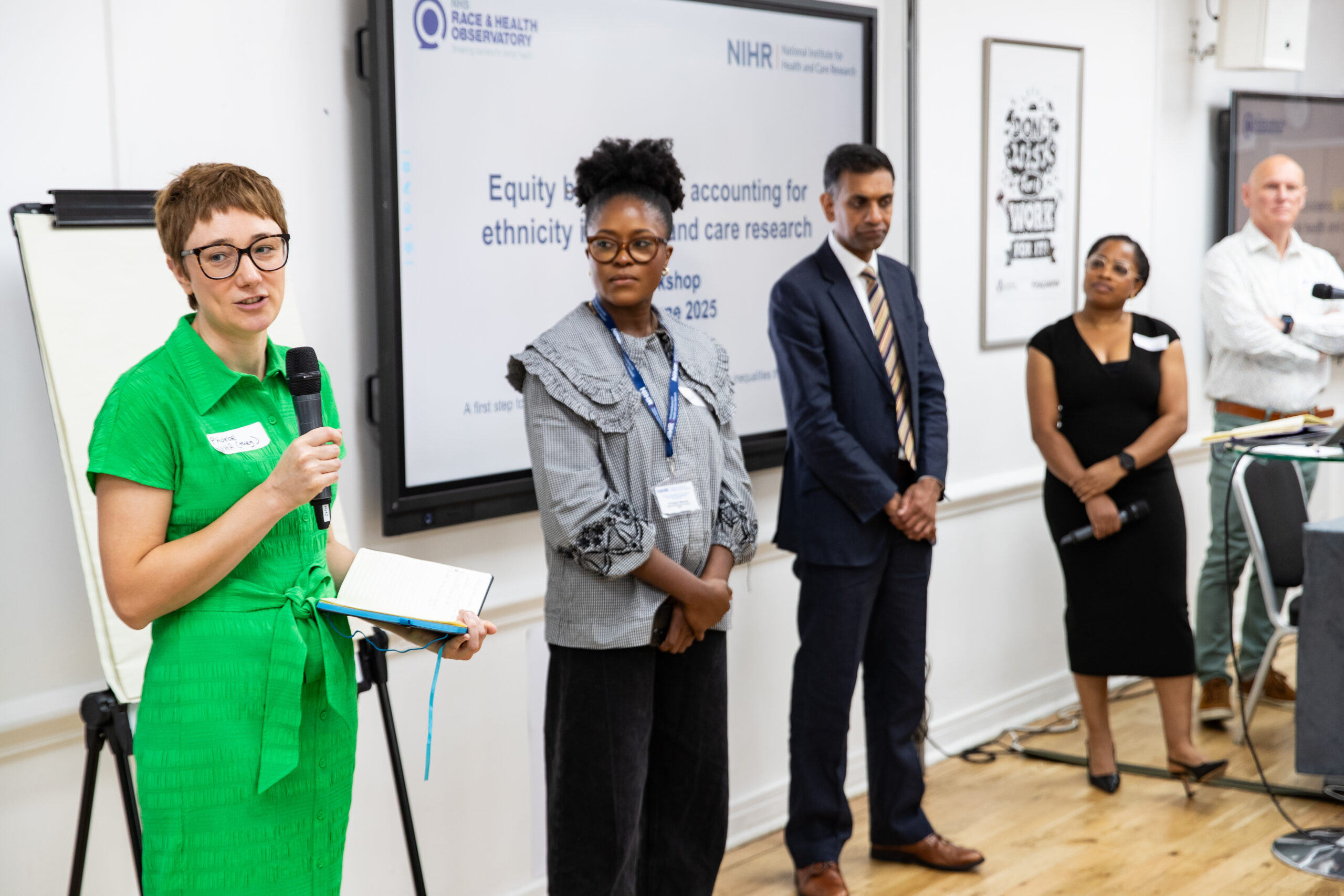
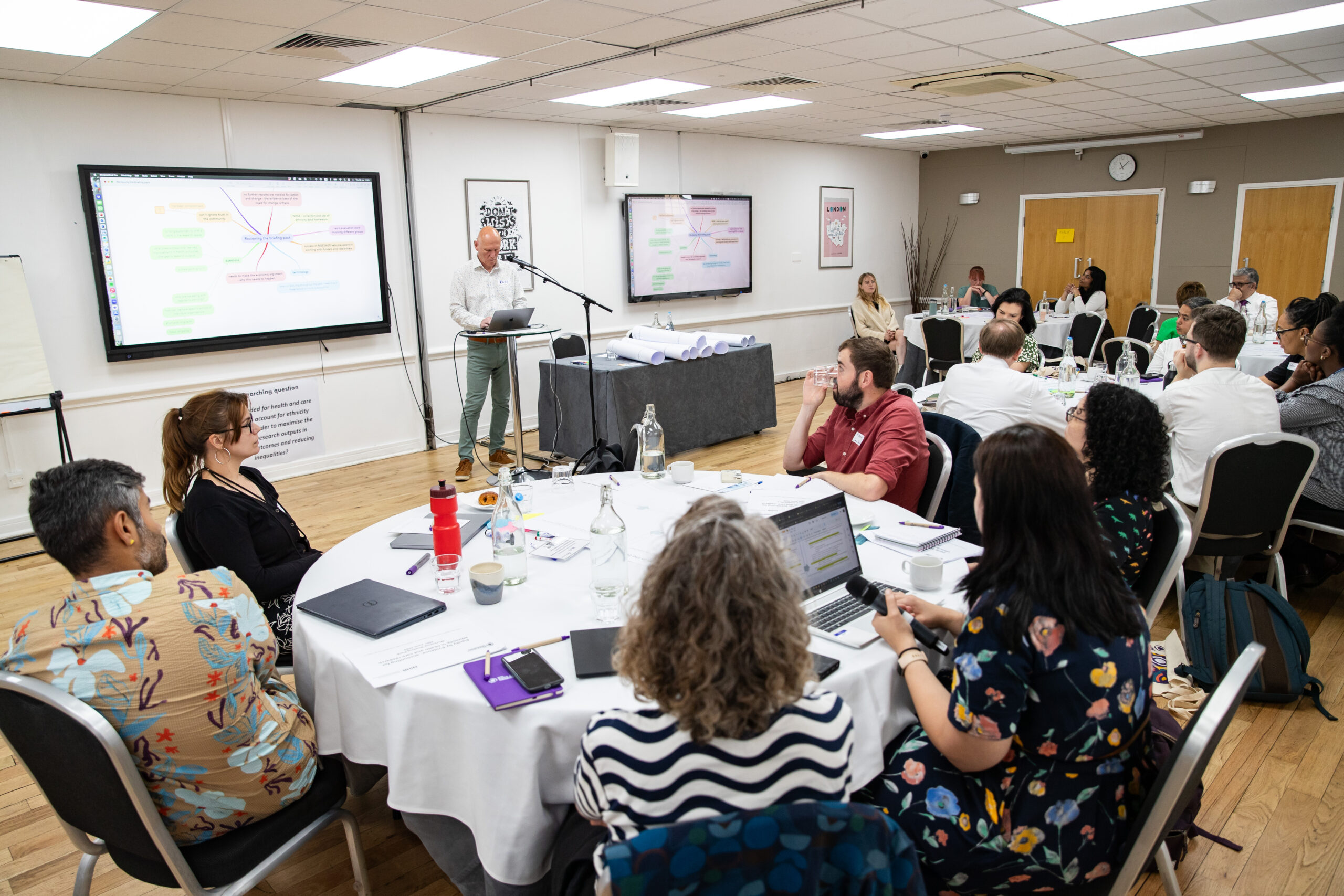
To help develop these practical actions, the RHO and NIHR held an exploratory workshop in June 2025, bringing together over 40 representatives from academic research groups, public and charitable funders, publishers, regulators, policy makers, and those with lived experience to develop recommendations for how health and care research can better take race and ethnicity into account in order to improve its impact on health outcomes and inequalities.
Findings from this workshop revealed a sector ready for change but needing coordinated support to do so. A unified approach is needed for the development, launch and implementation of a policy framework that all organisations can adopt and adapt to their needs. The RHO and NIHR will lead this work in collaboration with stakeholders to develop a framework and practical tools.
The report from the first workshop details the findings further and provides a roadmap for transforming how the UK research sector approaches ethnic diversity in health and care research.
Next Steps
A collaborative 15-month project co-led by the NHS Race and Health Observatory (RHO) and The George Institute for Global Health (TGI) at Imperial College London, with funding from the NIHR, commenced in April 2026.
TGI will be driving the policy labs with experience from the Medical Science Sex and Gender Equity (MESSAGE) project which delivered similar policy shift related to the integration of sex and gender in health research.
The policy lab method uses focused, collaborative workshops bringing together a range of stakeholders around a particular challenge to understand barriers and facilitators to change, and developing new ideas and practical approaches to address this real-world problem.
We will share updates along the way to keep you informed about how this important work is progressing.